Industry knowledge
Oval Head Screw Geometry: The Transition Radius That Prevents Stress Concentration
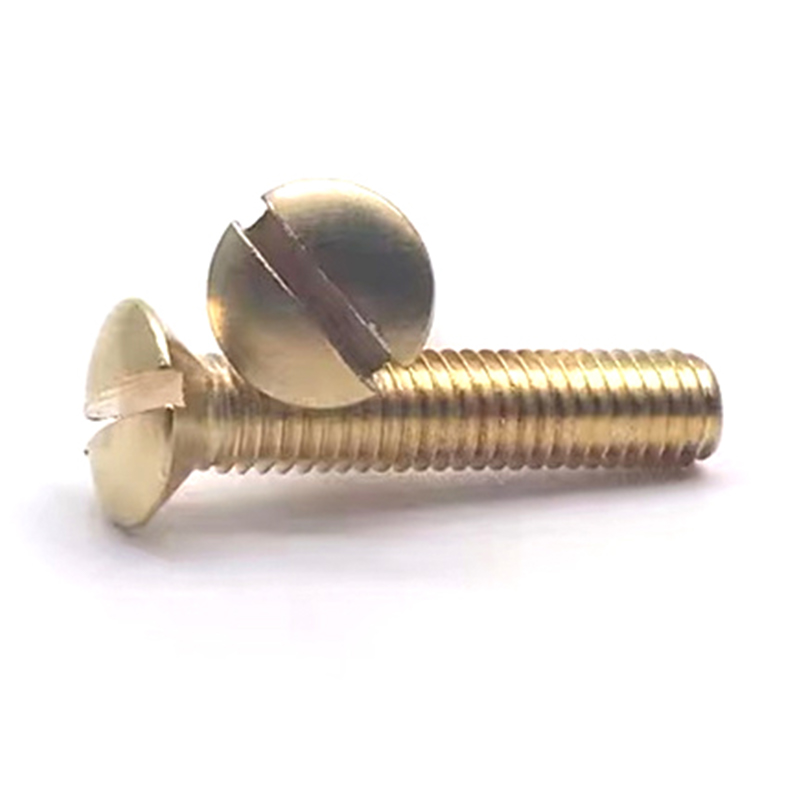
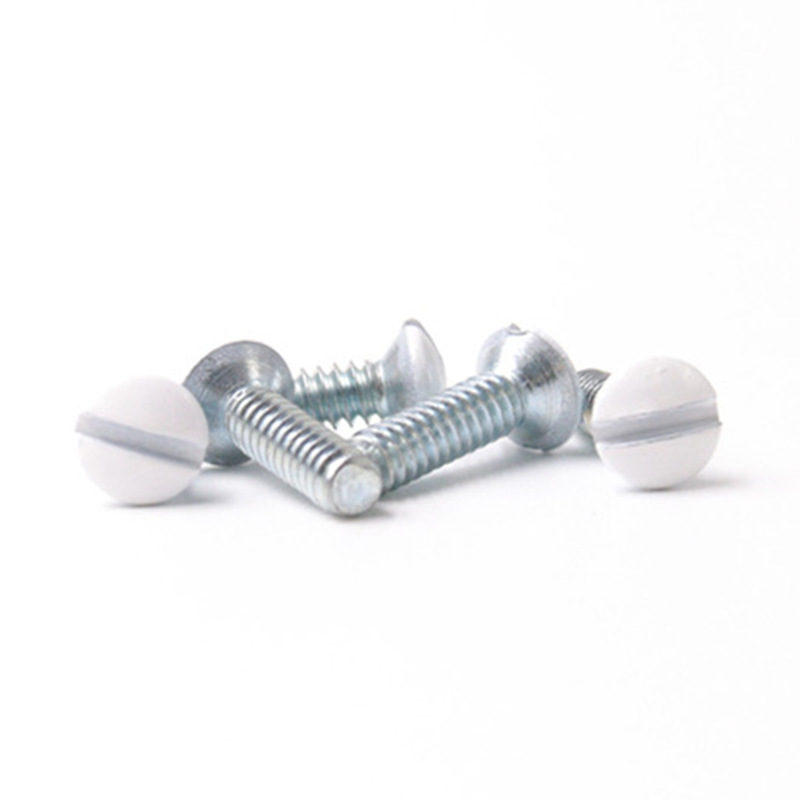
The defining characteristic of an oval head screw lies not merely in its domed aesthetic but in the precisely calculated transition radius between the head and the shank. Suzhou Anzhikou Hardware Technology Co., Ltd. manufactures oval head cross machine thread screws with transition radii typically ranging from 0.15 to 0.3 times the nominal thread diameter, depending on the specific standard applied. This fillet distributes bending stresses that would otherwise concentrate at the sharp 90-degree shoulder found on pan head or cheese head variants. In cyclic loading applications—such as hinge assemblies on industrial enclosures or pivot points on agricultural equipment—this stress distribution can extend fatigue life by 40 to 60 percent compared to equivalent pan head fasteners.
Anzhikou Hardware's cold heading equipment, imported from Taiwan and Japan, forms this transition in a single stroke rather than through secondary machining. The 200-plus precision machines at the company's 2000-square-meter facility maintain head-to-shank concentricity within 0.05mm total indicator reading, ensuring that the oval profile remains symmetrical. Asymmetry in the oval head creates uneven clamping loads; when tightened, the high side bears disproportionate pressure against the countersunk seat, leading to premature loosening or localized crushing of the mating material. For applications where the screw head remains exposed and serves an aesthetic function—such as on polished aluminum frames or display case hardware—this symmetry control is equally critical for visual consistency.
Countersink Angle Compatibility for Oval Head Seating
Oval head screws require mating holes prepared with an 82-degree countersink for imperial sizes or a 90-degree countersink for metric equivalents. The underside of the head forms a conical surface that must seat flush against this prepared angle. Anzhikou Hardware's thread-rolling wire equipment produces screws with head underside angles held to ±1 degree, preventing the partial seating that leaves a visible gap or creates a lever arm under lateral load. When partial seating occurs, the screw head acts as a wedge; vibration or thermal cycling gradually walks the fastener outward, reducing clamping force by 15 to 25 percent within the first thousand cycles.
| Screw Size |
Head Diameter (mm) |
Head Height (mm) |
Recommended Countersink Depth (mm) |
| M2 |
3.8 |
1.2 |
1.0 |
| M3 |
5.6 |
1.8 |
1.5 |
| M4 |
7.5 |
2.4 |
2.0 |
| M5 |
9.2 |
3.0 |
2.5 |
For soft materials such as ABS plastic or wood composites, the countersink depth should be increased by 0.2mm to accommodate material compression under the oval head's bearing surface. Anzhikou Hardware's engineering team of 10 technicians with 20 years of industry experience routinely advises customers on these material-specific adjustments during the non-standard screw customization process.
Phillips Cross Drive Optimization for Machine Thread Oval Head Screws
The Phillips cross recess on an oval head machine thread screw operates on a cam-out principle deliberately engineered to prevent over-torquing. Suzhou Anzhikou Hardware Technology Co., Ltd. forms these recesses using precision punch tooling that maintains the four-wing geometry within ±0.03mm across all production lots. The cam-out torque—the point at which the driver tip rides out of the recess—correlates directly with recess depth and wing angle. For M3 oval head screws, the typical cam-out torque ranges from 1.8 to 2.2 N·m; for M5 sizes, this increases to 5.5 to 6.5 N·m. These values align closely with the recommended seating torques for Class 4.8 and 8.8 steels, providing an inherent safeguard against thread stripping in manual assembly environments.
Driver Bit Selection and Wear Patterns
- Phillips #1 bits are specified for M2 through M3 oval head screws. Worn bits exhibit rounded wing tips that no longer seat fully in the recess, reducing contact area by up to 40 percent and transferring torque unevenly across the four wings. Anzhikou Hardware recommends bit replacement after 5,000 drive cycles in production environments.
- Phillips #2 bits handle M3.5 through M5 sizes. At these larger dimensions, the cross recess depth becomes critical; recesses shallower than 1.8mm on an M4 screw cause the driver to bottom out before the screw seats, leaving the assembly under-torqued by an average of 30 percent.
- For automated assembly lines, Anzhikou Hardware offers Pozidriv cross recess alternatives on custom oval head screws. The Pozidriv design incorporates eight additional contact flanks that resist cam-out, permitting torque application up to 1.5 times higher than standard Phillips without driver disengagement.
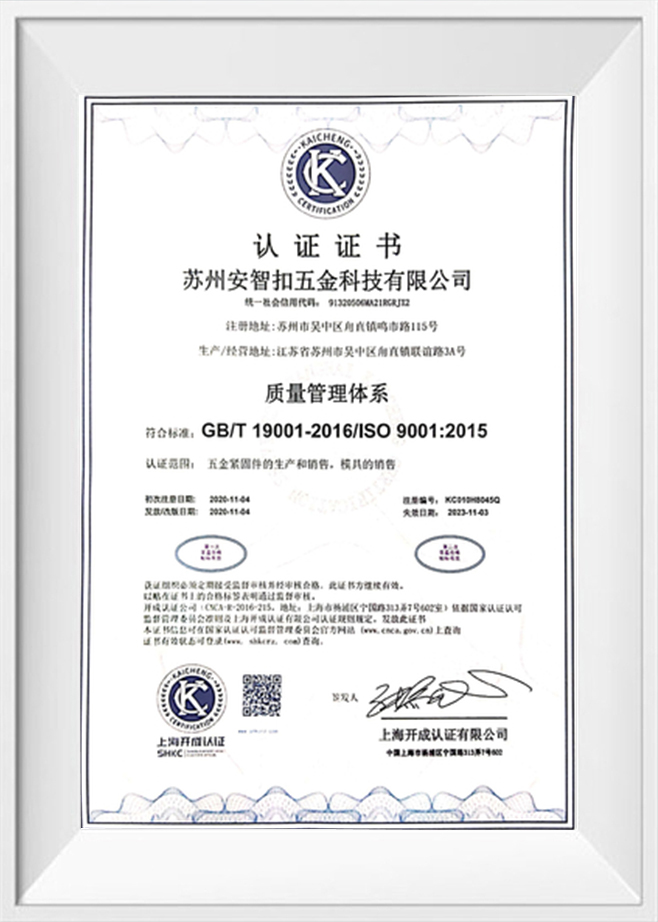
The company's ISO9001:2015 quality system includes 100 percent visual inspection of cross recess geometry under magnification, rejecting screws with burrs or flash that would impede driver engagement. This level of control supports the company's export business across 40 countries and areas, where assembly reliability expectations vary significantly between European automotive suppliers and North American consumer electronics manufacturers.
Machine Thread Pitch Selection for Oval Head Screws in Thin-Wall Applications
Oval head cross machine thread screws are frequently deployed in sheet metal and thin-wall plastic housings where thread engagement length is inherently limited. Suzhou Anzhikou Hardware Technology Co., Ltd. addresses this constraint through pitch optimization rather than simply increasing screw length. For materials with thickness below 1.5mm, fine pitch threads (e.g., M3×0.35 instead of the standard M3×0.5) increase the number of engaged threads from three to four within the same material thickness. Each additional engaged thread distributes the clamping load across a greater surface area, reducing the stress per thread flank by approximately 25 percent.
Thread Engagement Guidelines by Material Thickness
| Material Thickness (mm) |
Standard Pitch Engagement |
Fine Pitch Engagement |
Recommended Minimum Torque (N·m) |
| 0.8 |
1.5 threads |
2.3 threads |
0.6 |
| 1.0 |
2.0 threads |
2.9 threads |
0.9 |
| 1.2 |
2.4 threads |
3.4 threads |
1.2 |
| 1.5 |
3.0 threads |
4.3 threads |
1.8 |
Anzhikou Hardware's thread-rolling wire equipment, part of the more than 200 sets of precision machinery at the facility, can generate both standard and fine pitch profiles on oval head screws as small as 0.6mm external diameter. For extremely thin materials below 0.8mm, the company recommends transitioning to self-tapping thread forms rather than machine threads, as even fine pitch machine threads risk stripping the limited engagement length.
Surface Finish Selection for Oval Head Screws in Visible Assembly
Because the oval head profile remains partially exposed after installation, surface finish quality directly impacts both corrosion resistance and aesthetic appearance. Suzhou Anzhikou Hardware Technology Co., Ltd. offers several finish options through its comprehensive production lines, each suited to specific environmental and visual requirements. The domed top surface of an oval head screw acts as a lens for light reflection; scratches or orange peel texture from improper plating become immediately visible under direct lighting.
Finish Characteristics and Application Mapping
- Zinc plating with blue passivation provides 48 to 72 hours of salt spray resistance per ASTM B117 and delivers a bright, slightly bluish reflective surface. This finish is standard for indoor machinery and electrical enclosures. Anzhikou Hardware applies this finish through rack plating to prevent part-to-part contact that would create unplated witness marks on the oval head crown.
- Nickel plating achieves 96 to 120 hours of salt spray resistance and produces a warmer, yellow-white reflective surface preferred on brass-colored or gold-anodized assemblies. The nickel layer thickness of 8 to 12 microns also provides moderate galling resistance when threading into stainless steel or nickel-plated nuts.
- Black oxide treatment offers minimal corrosion protection (12 to 24 hours salt spray) but eliminates reflectivity entirely, making it ideal for optical equipment housings and military hardware where light discipline is required. The treatment penetrates 0.5 to 1.0 microns into the steel surface without dimensional change, preserving the precise oval head geometry critical for flush seating.
- For outdoor architectural applications, Anzhikou Hardware recommends 316 stainless steel oval head screws with electropolishing. The electropolish removes 5 to 10 microns of surface material, eliminating cold-working marks from the heading process and raising the chromium-to-iron ratio at the surface, which extends salt spray resistance beyond 1000 hours in coastal environments.
The company's quality testing equipment includes gloss meters and surface roughness profilometers that verify finish consistency across production lots. With annual production capacity reaching 2,000 square meters of standard and non-standard screws, Anzhikou Hardware maintains batch-to-batch color variation within ΔE 1.5 for plated finishes—an tolerance tight enough that replacement screws installed years after initial assembly remain visually indistinguishable from the originals.
Anti-Loosening Modifications for Oval Head Cross Machine Thread Screws
Standard oval head machine thread screws rely entirely on thread friction and clamping load to resist loosening. In applications subject to vibration—such as HVAC ductwork, conveyor systems, or vehicle trim panels—this friction alone proves insufficient. Suzhou Anzhikou Hardware Technology Co., Ltd. integrates anti-loosening features directly into the screw design through its dedicated anti-loosing production equipment, avoiding the need for secondary locking components like washers or adhesives applied during assembly.
Prevailing Torque Features for Oval Head Screws
The most effective anti-loosening approach for machine thread oval head screws is the application of a nylon patch or pellet to the thread crest. Anzhikou Hardware applies nylon 11 or nylon 12 patches in a 120-degree arc on the screw's upper threads. When threaded into a mating component, the nylon displaces slightly, creating an interference fit that generates prevailing torque—typically 15 to 25 percent of the final seating torque. This prevailing torque persists across temperature cycles from -40°C to 120°C and allows the screw to be removed and reinstalled three to five times before the nylon patch degrades.
For higher-temperature environments up to 200°C, the company offers oval head screws with deformed thread sections created during the thread-rolling process. A localized 0.03 to 0.05mm increase in pitch diameter along one or two thread turns generates mechanical interference without foreign material. Because this deformation occurs on the screw rather than the nut, it permits unlimited reusability of the mating component—an important consideration for expensive castings or injection-molded housings. Anzhikou Hardware's 20 years of experience in non-standard screw customization enables precise tuning of this deformation magnitude based on the customer's specified torque range and mating material hardness.
In applications requiring both vibration resistance and frequent disassembly—such as access panels on industrial control cabinets—Anzhikou Hardware recommends oval head screws with a serrated bearing surface under the head. These serrations, formed during cold heading, bite into the mating surface when torque is applied, creating a mechanical lock that resists rotation while still permitting straightforward removal with standard tools. The serration depth of 0.1 to 0.15mm is shallow enough to avoid damaging painted or anodized surfaces, yet sufficient to increase loosening resistance by 60 percent compared to smooth bearing surfaces in transverse vibration testing per DIN 65151.

-2.jpg "Šroub s křížovým strojním závitem z nerezové oceli s oválnou hlavou DIN966 m3")
.jpg "DIN7995 st6.3 mosazný samořezný šroub s oválnou hlavou do nábytku")
.png "GB69 Vysoce kvalitní šroubový uzávěr m5 se zápustnou hlavou a drážkou")
.jpg "GB69 m4 černý poniklovaný šroub se strojním závitem s oválnou hlavou")